Share this on:
What Is the Best Way to Insulate a Metal Building?
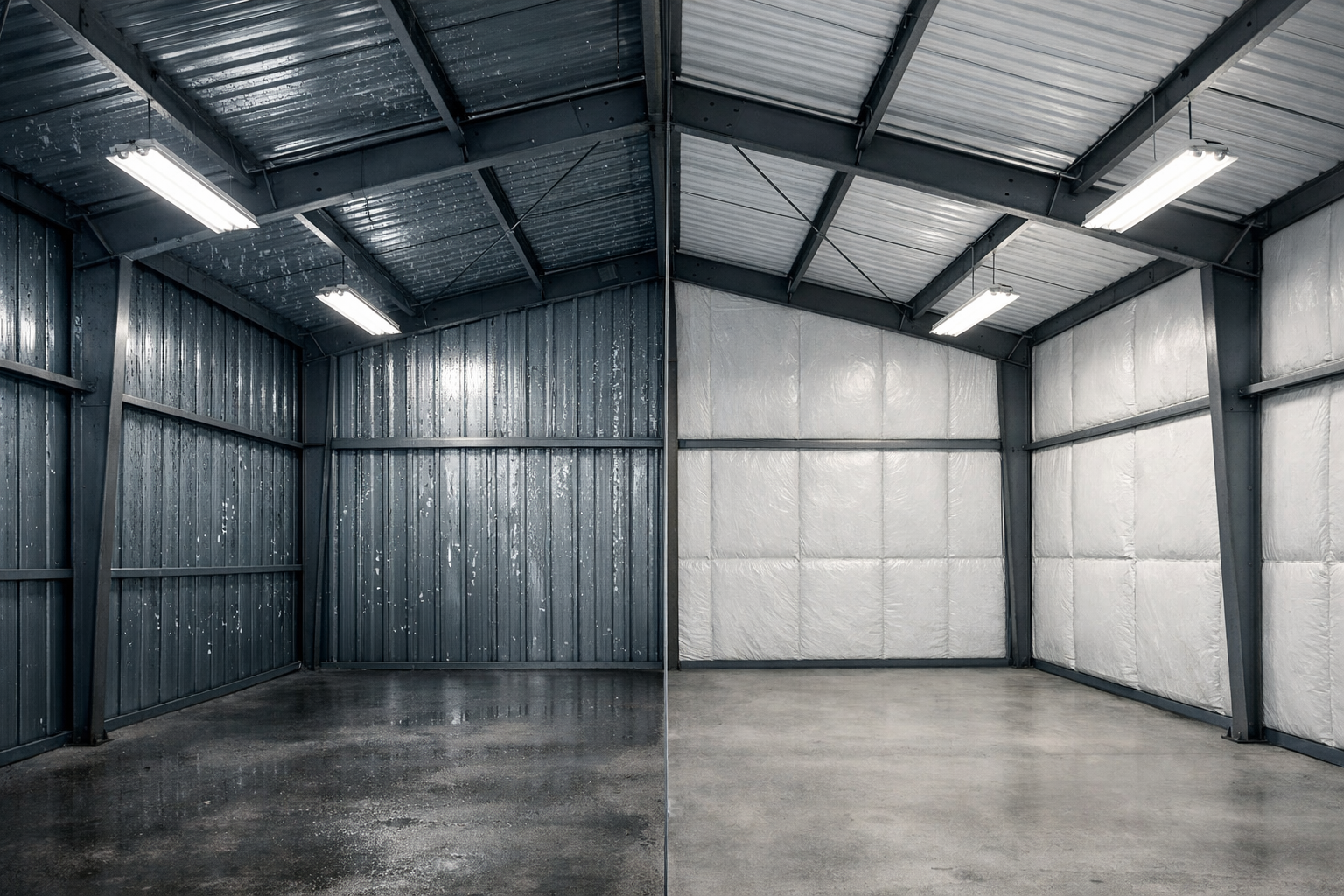
The best way to insulate a metal building is to install insulation on the roof and walls using fiberglass, spray foam, rigid board, or radiant barriers, combined with a proper vapor barrier to control moisture and temperature.
This approach reduces heat transfer, prevents condensation, and improves energy efficiency across all climates.
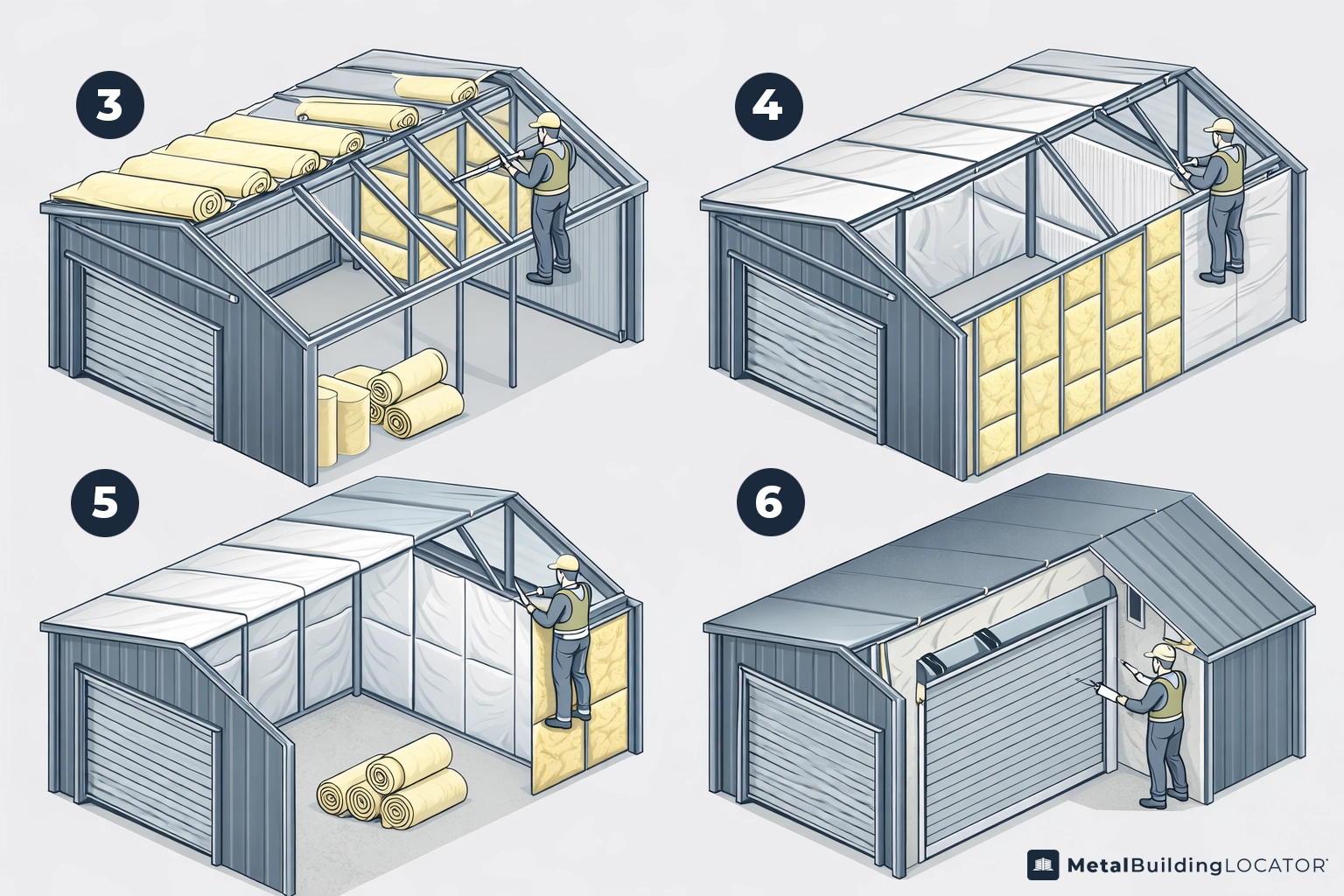
How to Insulate a Metal Building (Step-by-Step)
This step-by-step method ensures consistent thermal performance and moisture control.
Why Insulating a Metal Building Matters
Metal buildings are durable but highly conductive. Without insulation, they are prone to extreme temperature swings and condensation buildup.
Insulation helps:
Whether residential, agricultural, or commercial, insulation protects your investment.
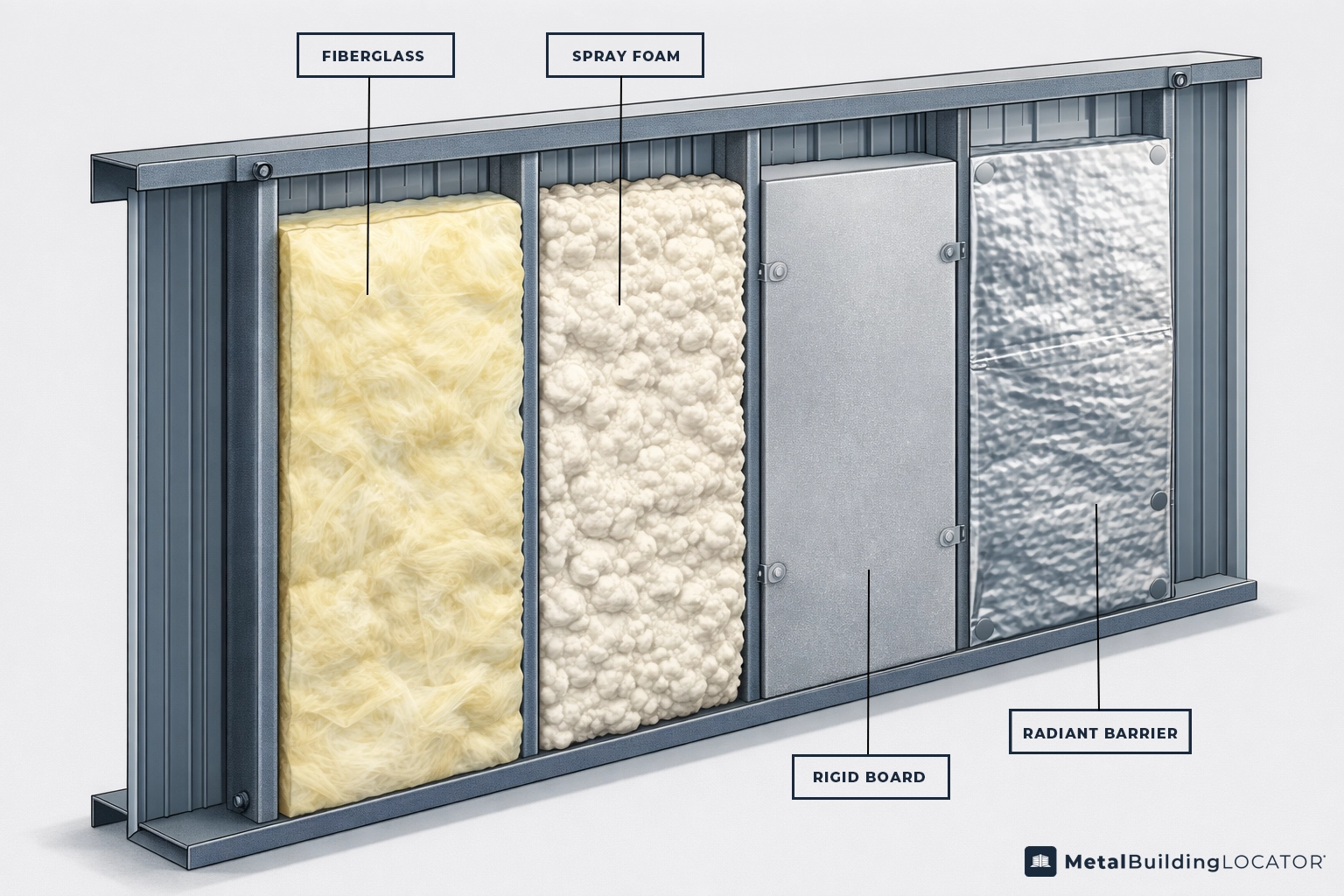
Metal Building Insulation Types Compared
Each insulation type serves a specific purpose, and many buildings benefit from a hybrid approach.
Fiberglass Insulation for Metal Buildings
Fiberglass insulation is one of the most widely used options due to affordability and ease of installation.
It is typically installed between wall girts and roof purlins with a vapor barrier facing the interior. When properly sealed, fiberglass provides reliable thermal performance for garages, barns, and warehouses.
Spray Foam Insulation for Metal Buildings
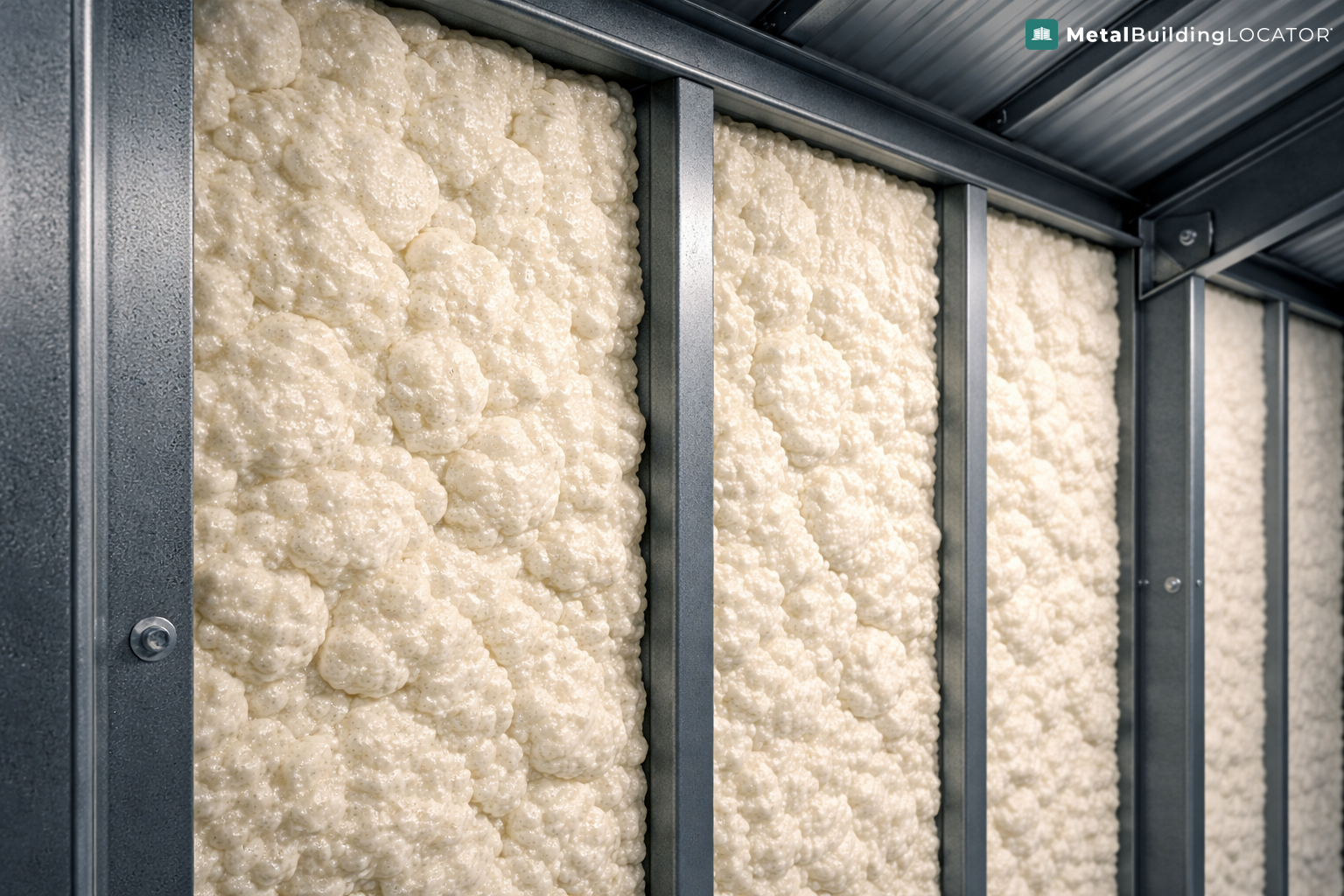
Spray foam insulation delivers superior performance by sealing air gaps and adhering directly to metal panels.
It offers:
Spray foam is ideal for workshops, commercial buildings, and climate-controlled spaces.
Rigid Board Insulation
Rigid foam board insulation is often used for interior finishes or retrofit projects.
It resists moisture, maintains shape over time, and provides a clean, finished appearance. Installation requires careful cutting and fastening to ensure airtight coverage.
Radiant Barrier Insulation
Radiant barriers reflect heat rather than absorbing it, making them effective in warm climates.
They are commonly installed under metal roofing to reduce radiant heat gain and are often combined with other insulation types for best results.
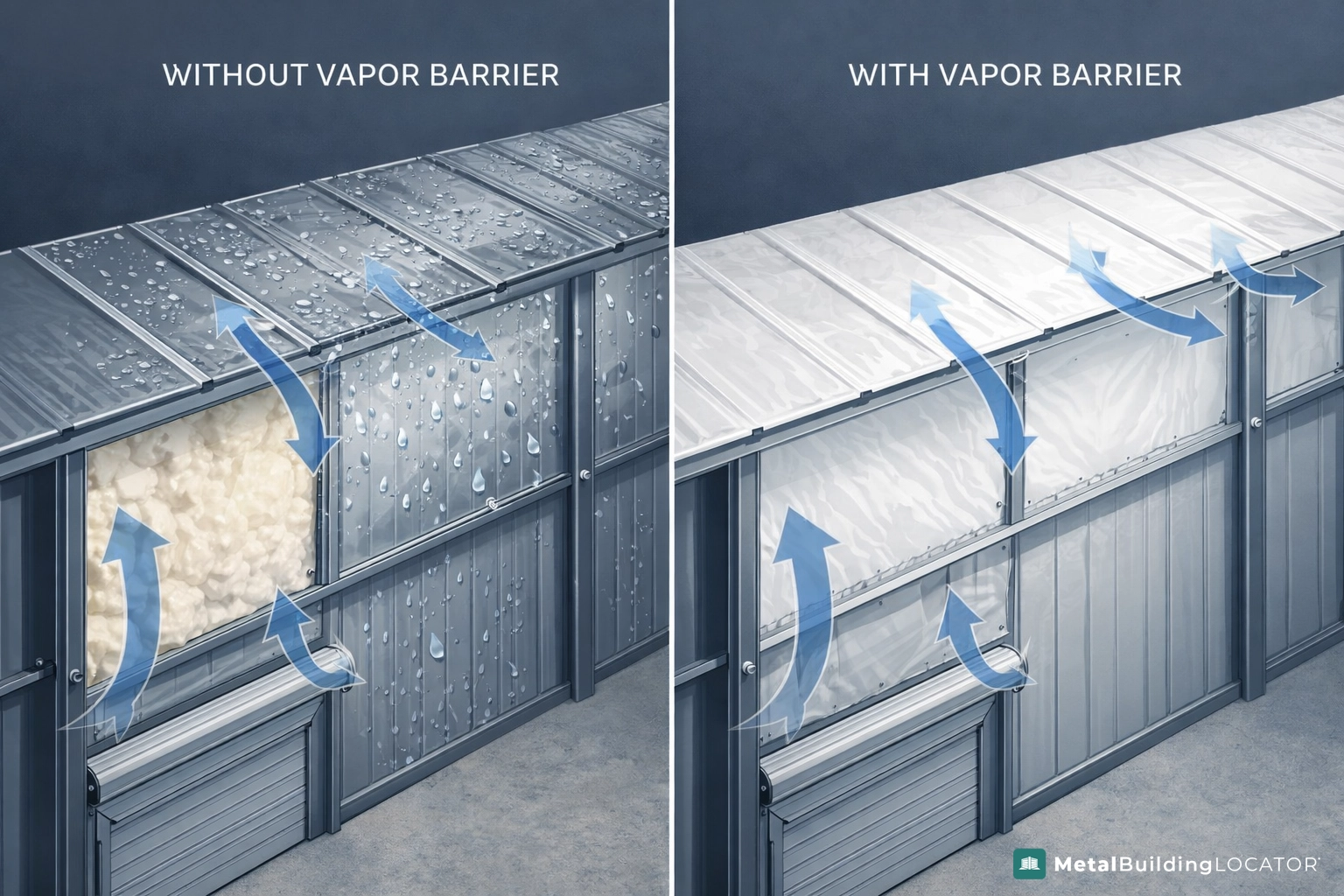
Does a Metal Building Need a Vapor Barrier?
Yes, most metal buildings need a vapor barrier to prevent condensation. When warm air meets cold metal panels, moisture forms, which can lead to rust, mold, and insulation damage if not controlled.
Proper vapor control is essential in both heated and unheated buildings.
Insulating the Roof, Walls, and Foundation
Skipping any of these areas reduces overall insulation effectiveness.
FAQs About Metal Building Insulation
What Is the Cheapest Way to Insulate a Metal Building? Fiberglass insulation is usually the most affordable option and performs well when installed with a vapor barrier.
Can You Insulate an Existing Metal Building? Yes. Existing metal buildings can be insulated using spray foam, rigid board, or interior wall systems without removing exterior panels.
Is Spray Foam Worth It for Metal Buildings? Spray foam is worth it for buildings that are heated or cooled year-round due to its insulation performance and moisture control.
Disclaimer: Images displayed on this website may include digital renderings, simulated environments, or illustrative examples. Actual buildings, materials, colors, dimensions, and features may vary based on design selections, site conditions, engineering requirements, and local building codes. Images are provided for general visualization purposes only and are not intended to represent exact specifications or final construction outcomes.