Share this on:
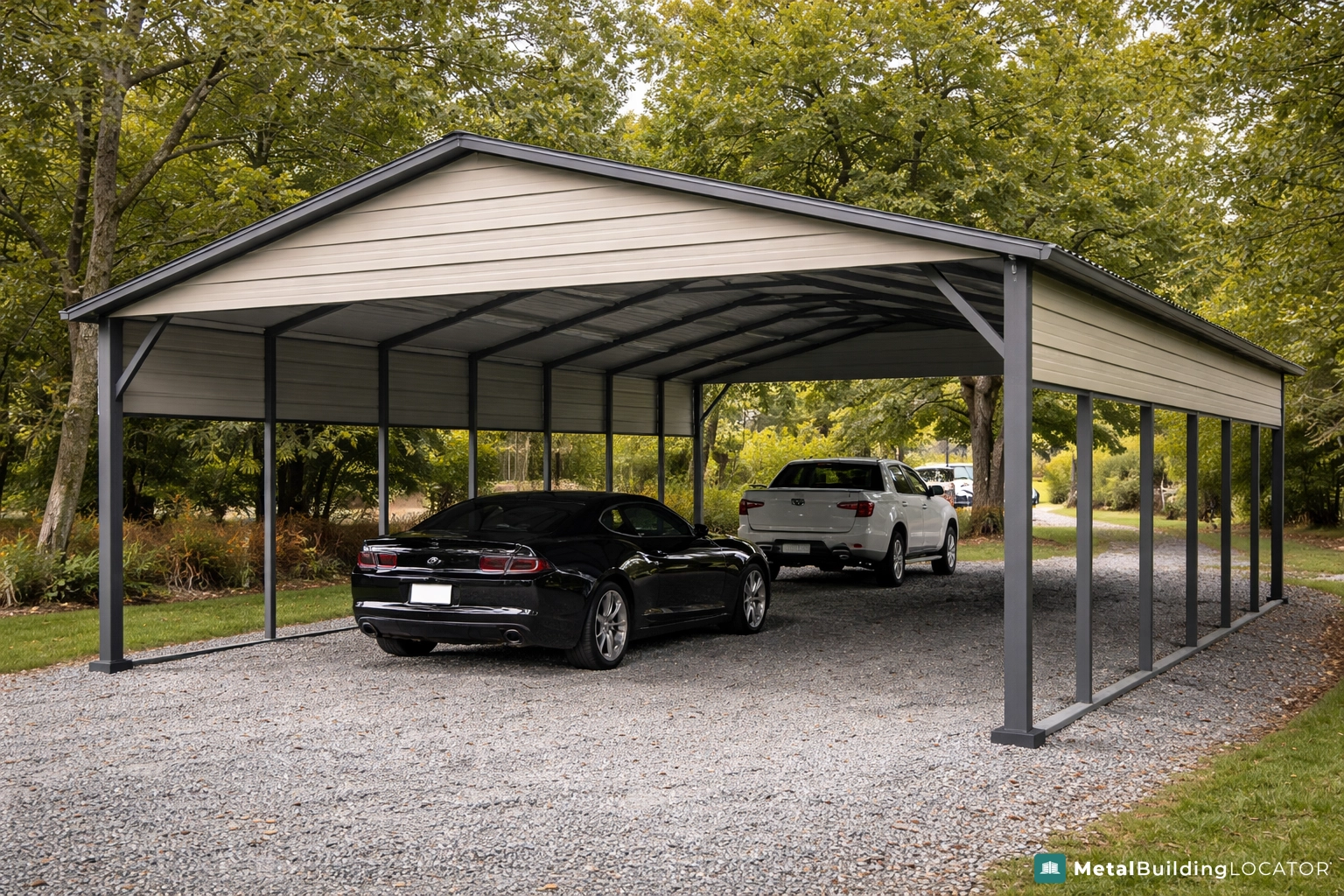
What is a carport and why do so many homeowners and businesses choose one over a garage? A carport is a roofed structure designed to protect vehicles from weather exposure while remaining partially or fully open on the sides. Unlike a garage, a carport does not require full enclosure or large foundations, making it a faster and more affordable solution for vehicle protection.
Carports are commonly used to shelter cars, trucks, RVs, boats, motorcycles, and even equipment. They are most often built from metal, especially steel, due to strength, longevity, and low maintenance requirements.
Understanding what is a carport helps buyers make informed decisions about protecting vehicles without overspending on construction.
How Does a Carport Work?
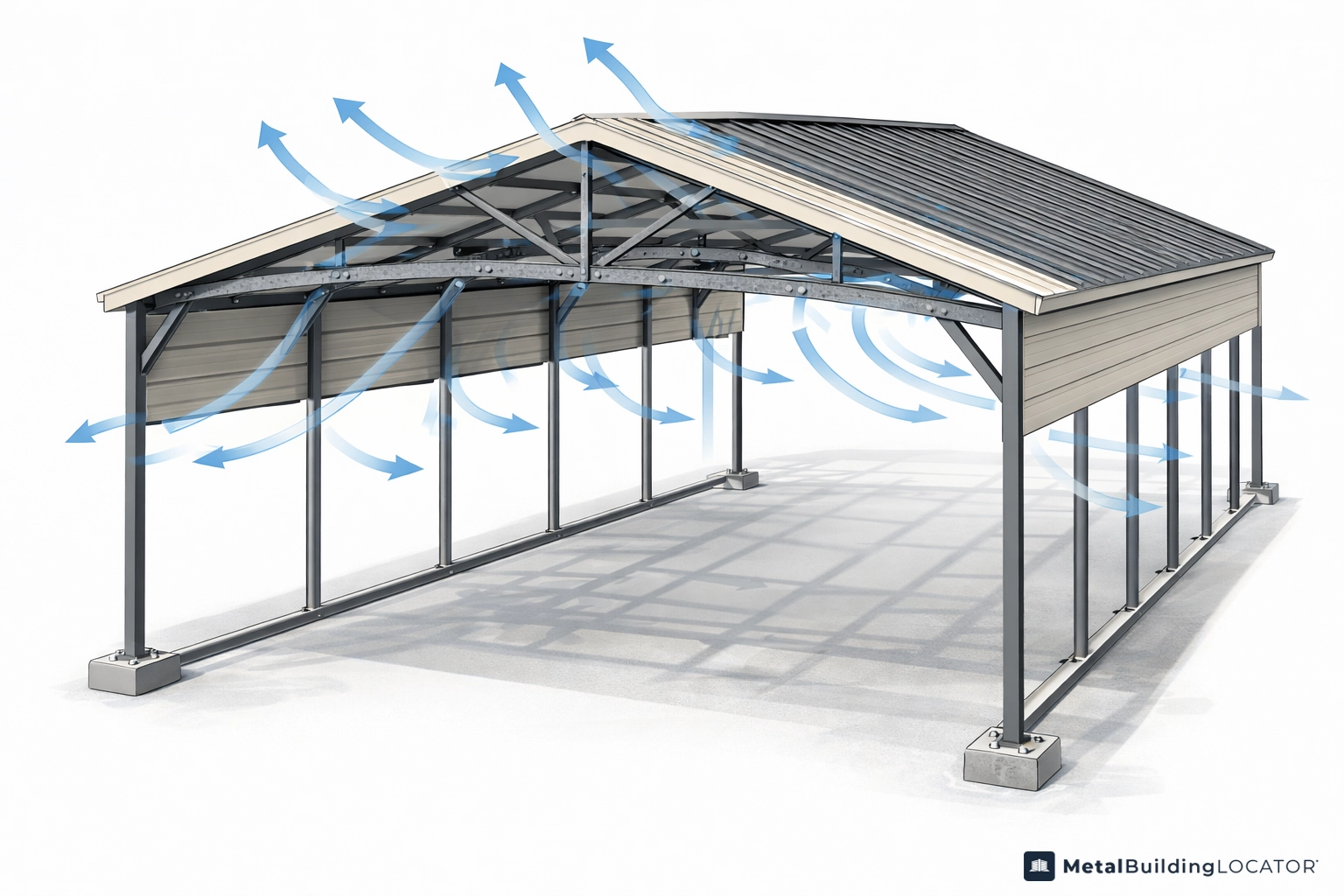
To fully understand what is a carport, it helps to know how it functions. A carport works by creating a durable overhead barrier that shields vehicles from sun, rain, hail, snow, and falling debris. The open sides allow airflow, reducing moisture buildup and preventing trapped humidity that can cause corrosion.
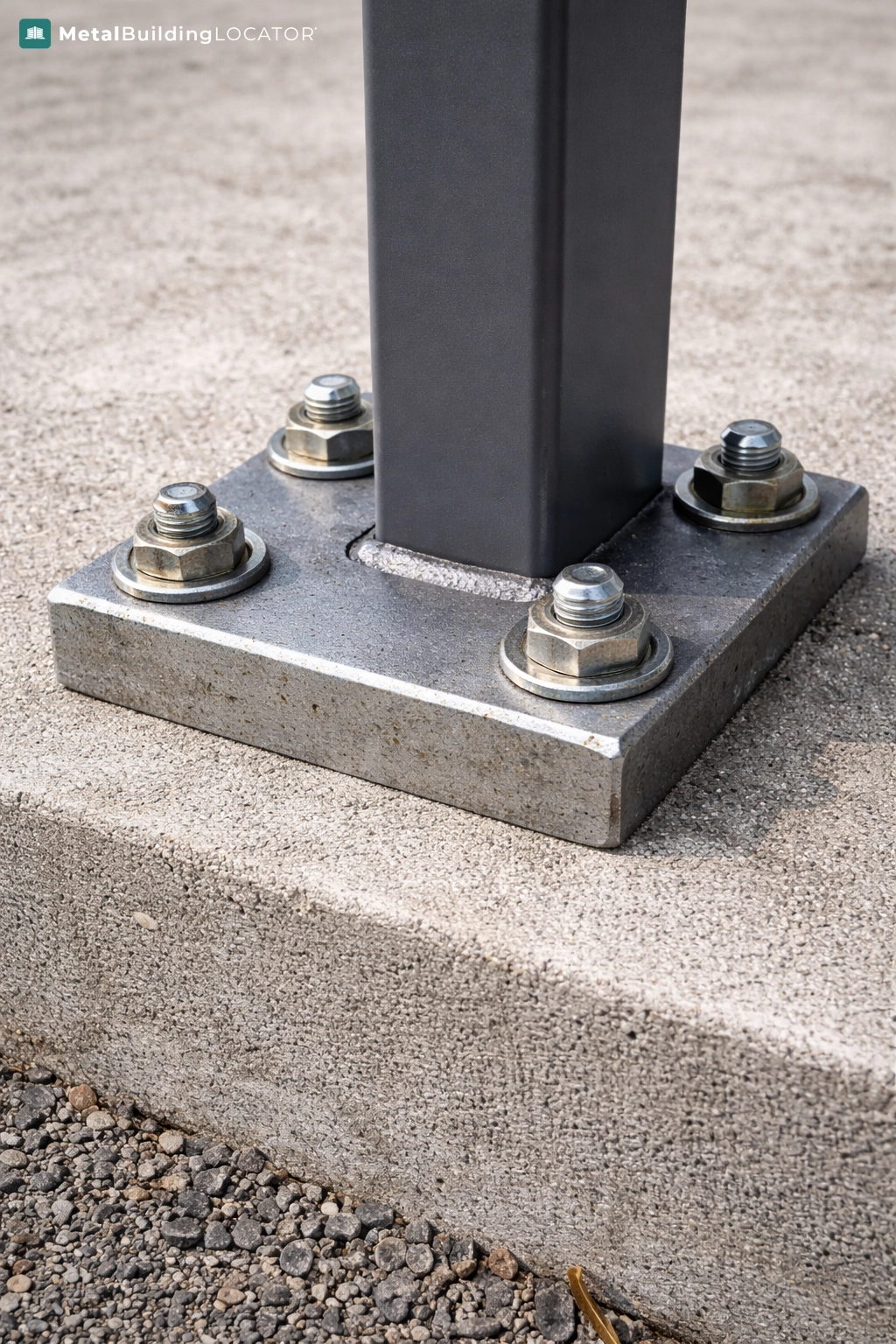
Metal carports are secured to the ground using engineered anchoring systems. These may include concrete anchors, mobile home anchors, or asphalt anchors depending on the installation surface. Proper anchoring allows carports to withstand wind and storm conditions when installed correctly.
Common Uses for Carports
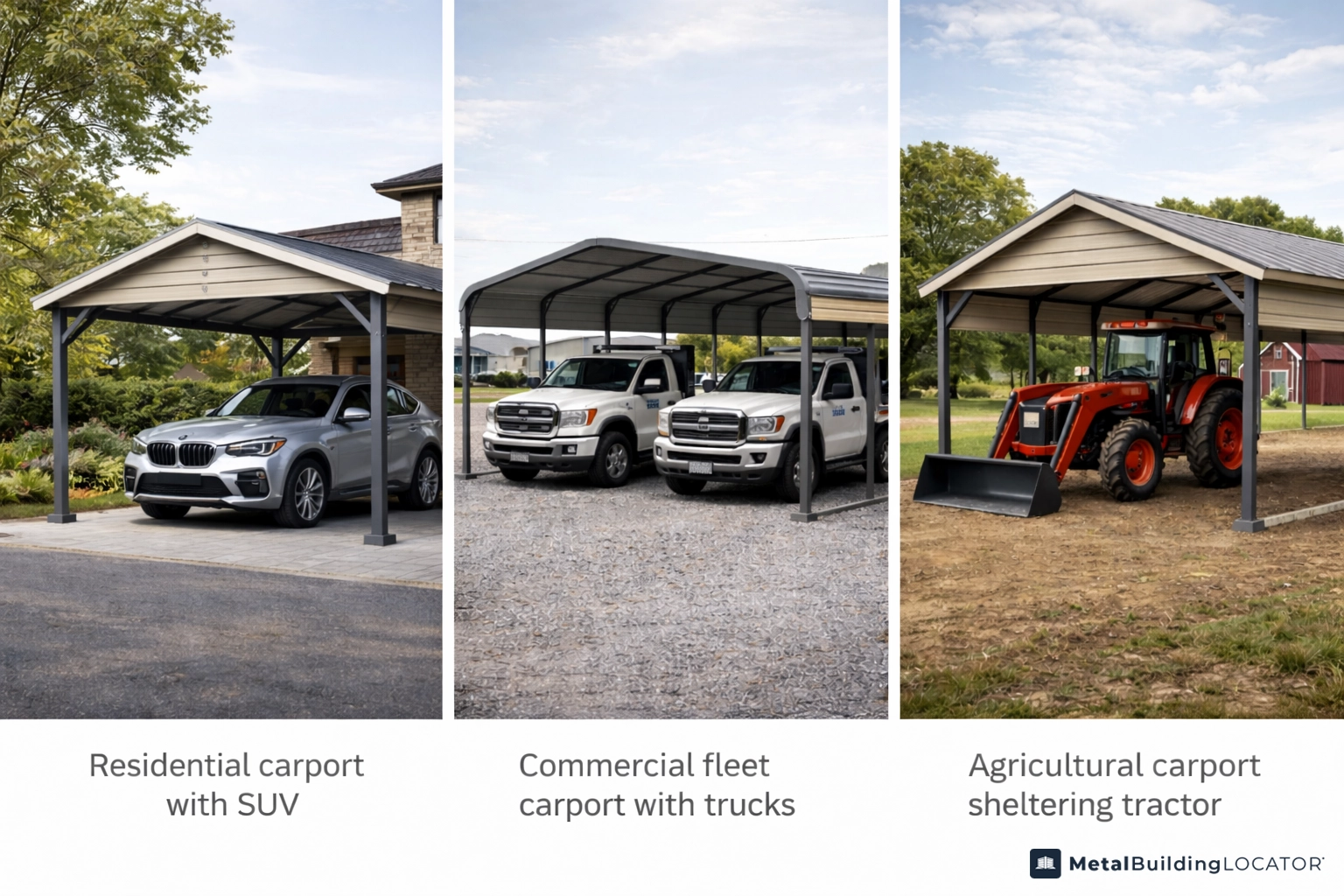
Carports are extremely versatile and can be used in residential, commercial, and agricultural settings.
Residential Uses: Homeowners often install carports to protect daily drivers, classic cars, motorcycles, and recreational vehicles. Many homeowners also use carports as covered outdoor spaces for grilling, gatherings, or storage.
Commercial Uses: Businesses use carports to cover fleet vehicles, customer parking areas, equipment, and loading zones. They are also popular at rental properties and apartment complexes.
Agricultural and Industrial Uses: Farmers and contractors frequently use carports to shelter tractors, trailers, hay, tools, and machinery from weather exposure.
Types of Carports
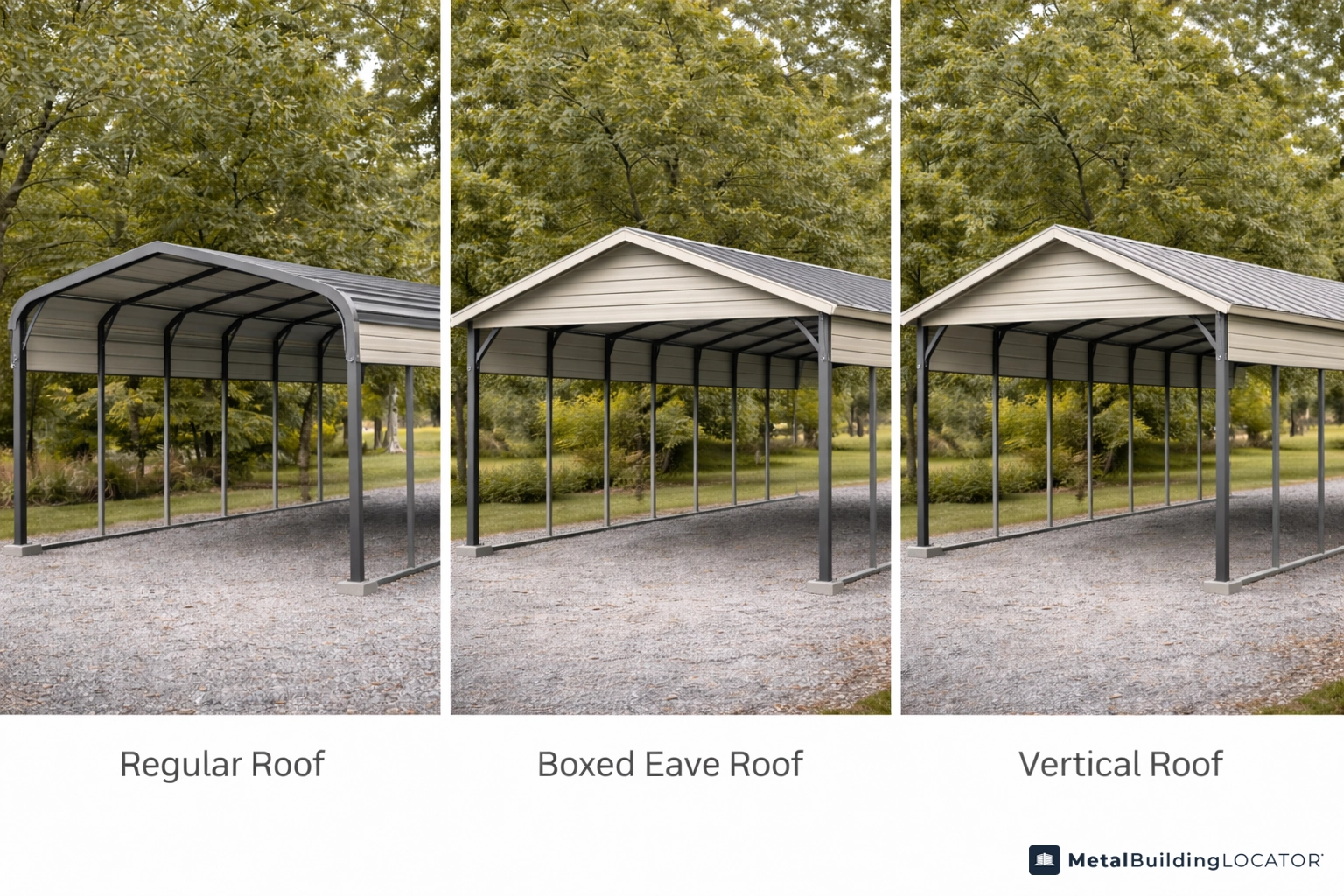
Regular Roof Carports: Regular roof carports have a rounded roof design and are the most affordable option. They are best suited for mild climates with limited snow accumulation.
Boxed Eave Carports: Boxed eave carports feature horizontal roof panels with an A frame appearance. They offer better water runoff control and a more traditional look.
Vertical Roof Carports: Vertical roof carports are the most durable option. The roof panels run vertically from ridge to eave, allowing snow, rain, and debris to slide off easily. This style is ideal for areas with heavy snowfall or frequent storms.
Carport Sizes and Layout Options
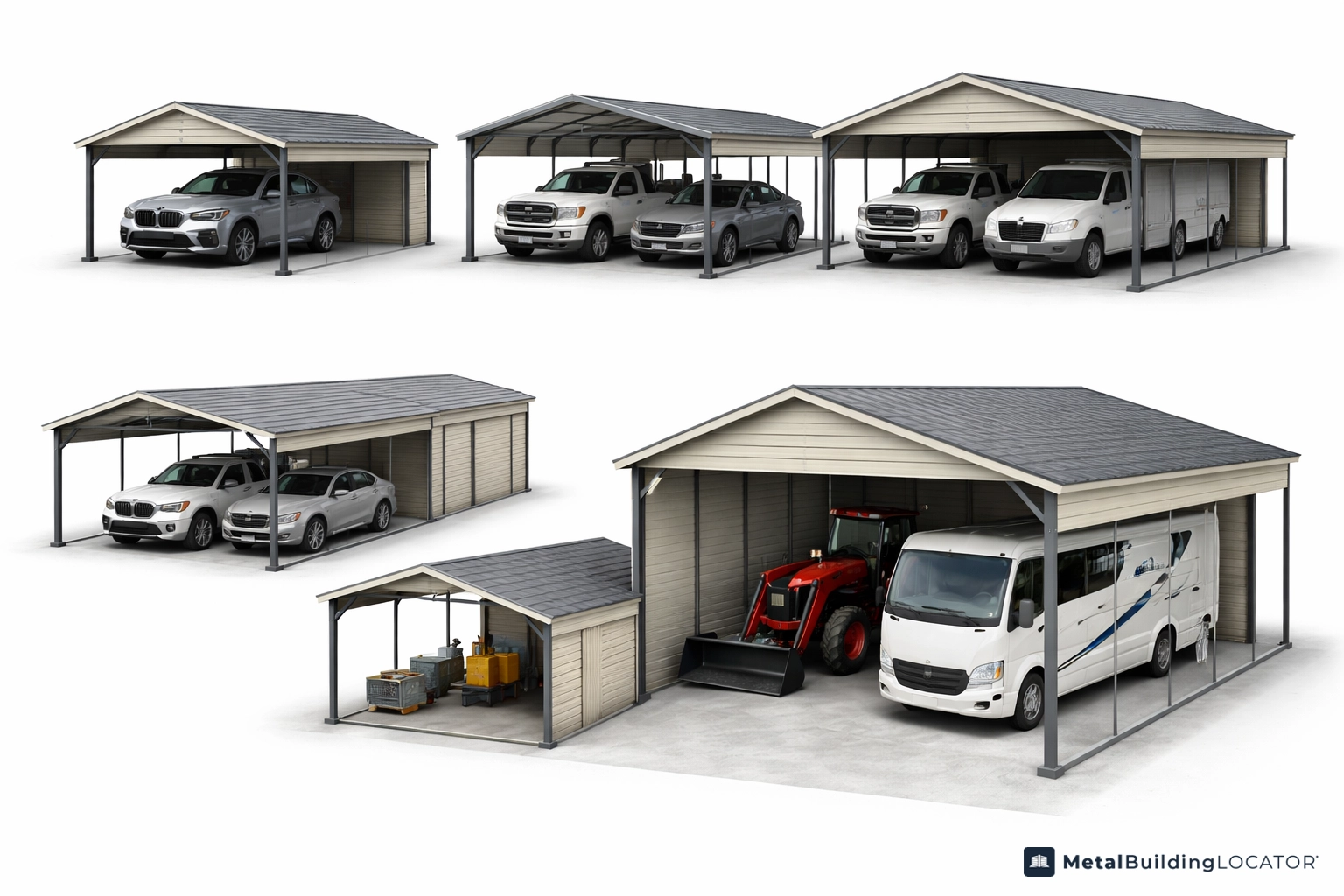
Carports are available in a wide range of sizes to accommodate different vehicles and storage needs.
Common single car sizes include 12×20 and 12×25. Double car carports typically measure 18×20 or 20×20. RV and boat carports can extend to 12×40, 18×40, or larger.
Custom options allow buyers to add side panels, enclosed ends, extra height, or extended roofs for additional coverage.
What Are Carports Made Of?
Metal Carports: Steel and aluminum carports are the most common and offer excellent strength, longevity, and resistance to rust when properly coated. Metal carports require minimal maintenance and can last decades.
Wood Carports: Wood carports offer a traditional appearance but require regular maintenance such as painting or sealing. They are more susceptible to rot, insects, and weather damage.
Metal carports remain the preferred choice due to their cost efficiency and structural performance.
How Much Does a Carport Cost?
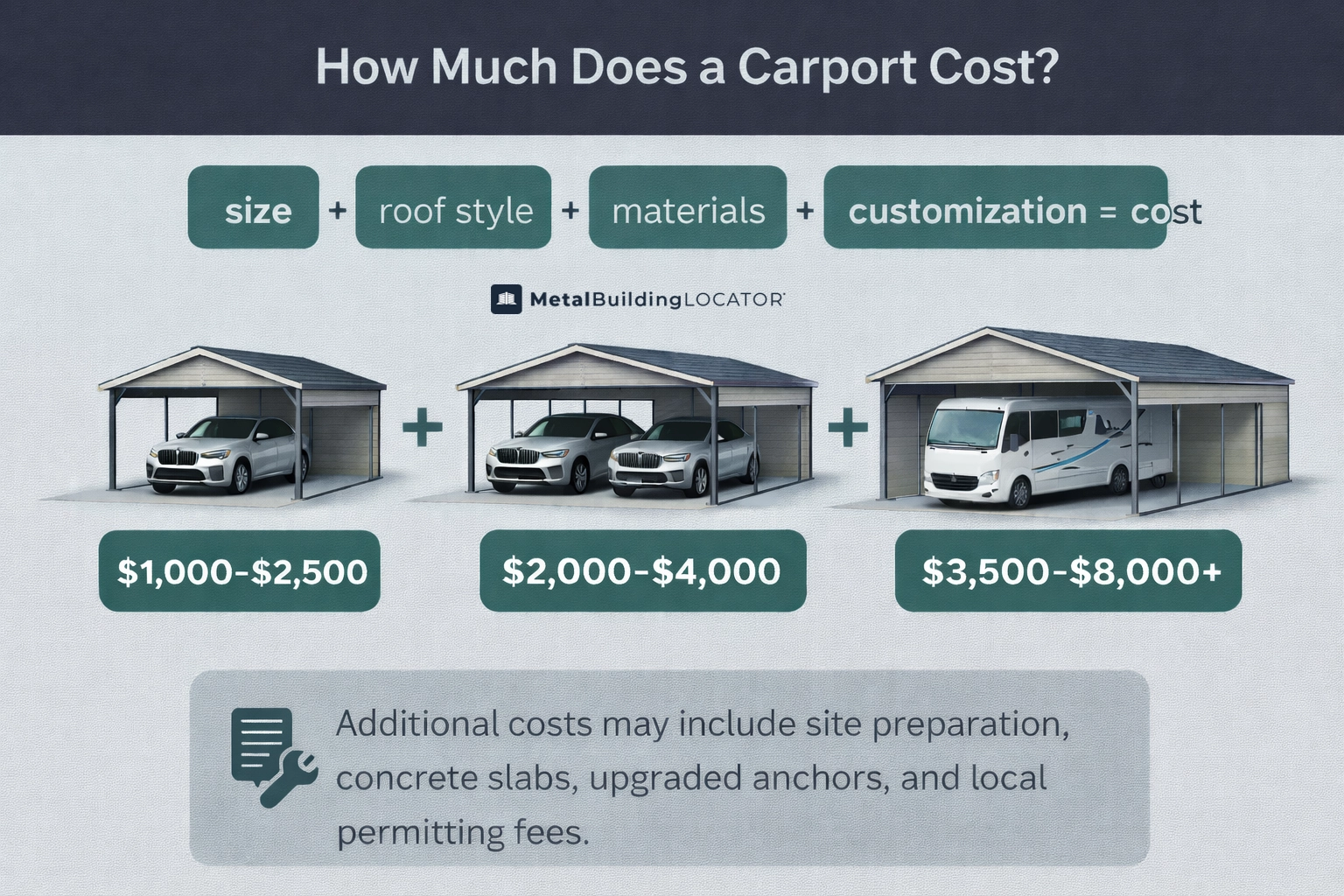
The cost of a carport depends on size, roof style, materials, and customization.
Basic single car metal carports typically range from $1,000 to $2,500 installed. Double car carports usually cost between $2,000 and $4,000. Large RV carports can range from $3,500 to $8,000 or more depending on height and length.
Additional costs may include site preparation, concrete slabs, upgraded anchors, and local permitting fees.
Do Carports Require Permits?
Permit requirements vary by location. Some areas allow small carports without permits, while others require zoning approval and engineered drawings.
Metal carports can often be certified to meet local wind and snow load requirements. It is always recommended to check with your local building department before installation.
Carport vs Garage Comparison
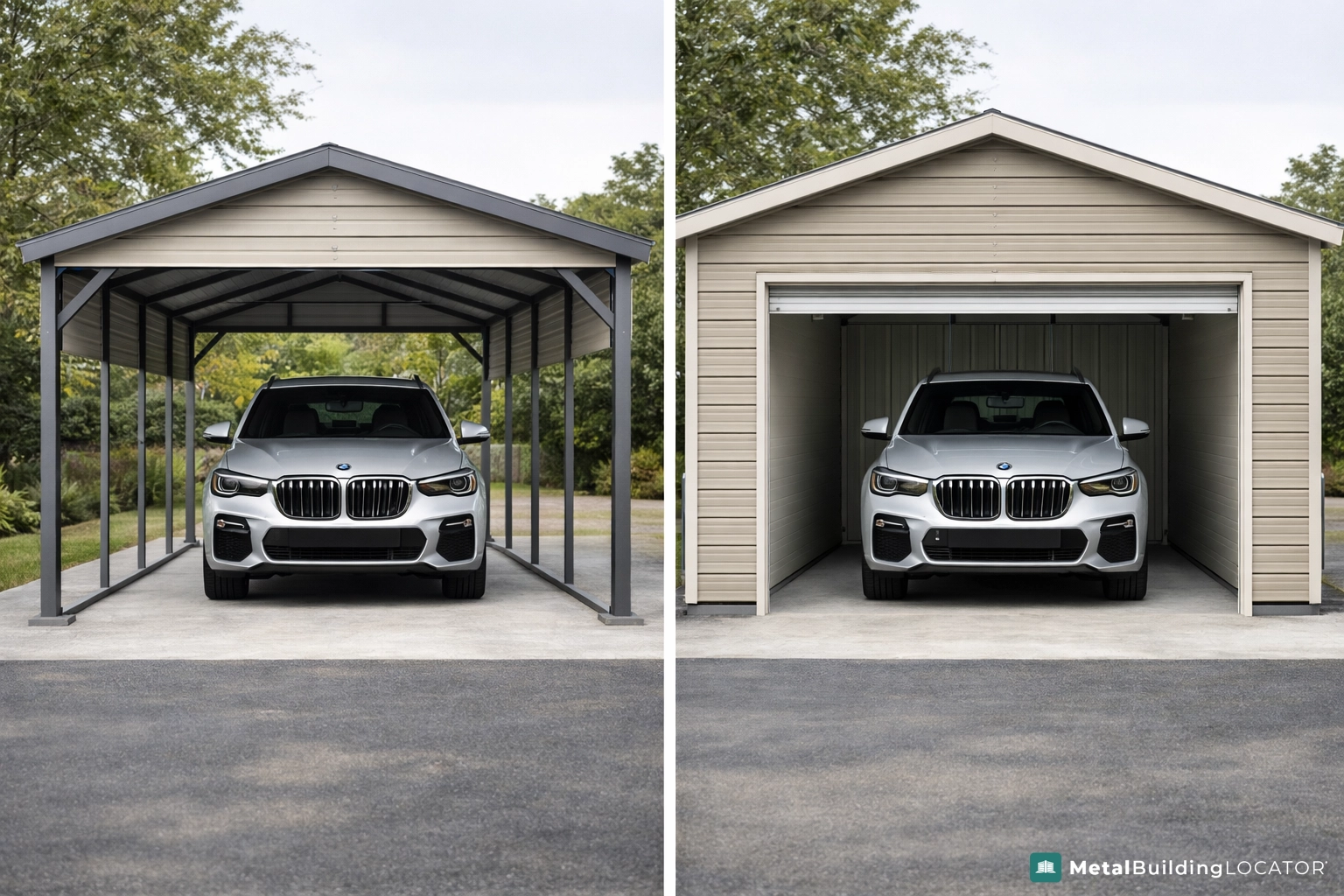
A key question when learning what is a carport is how it compares to a garage.
Carports are open structures that cost less and install faster. Garages are fully enclosed, offer more security, and provide additional storage but require more time, materials, and permits.
For buyers prioritizing affordability and simplicity, carports are often the preferred choice.
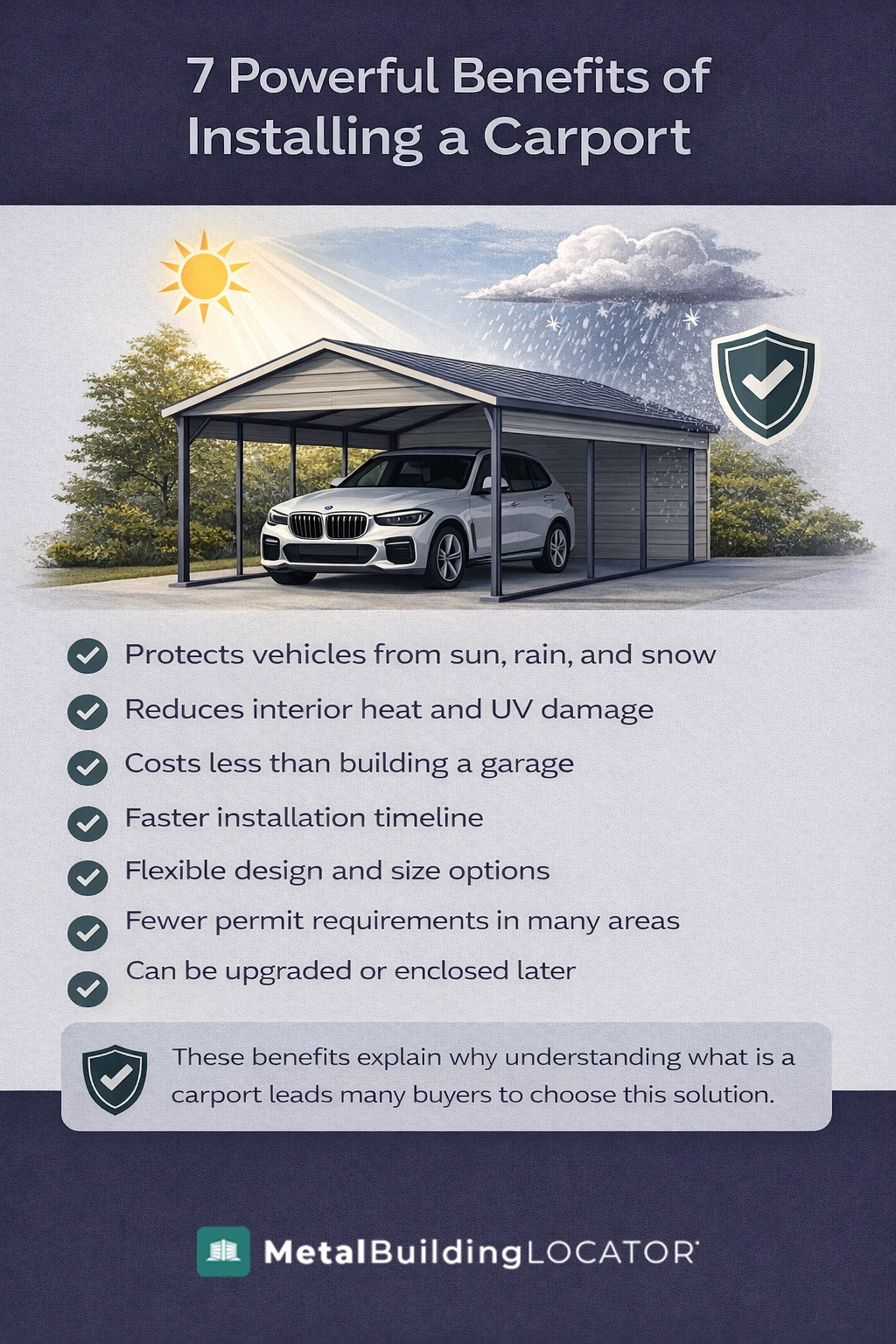
7 Powerful Benefits of Installing a Carport
These benefits explain why understanding what is a carport leads many buyers to choose this solution.
Are Metal Carports Durable?
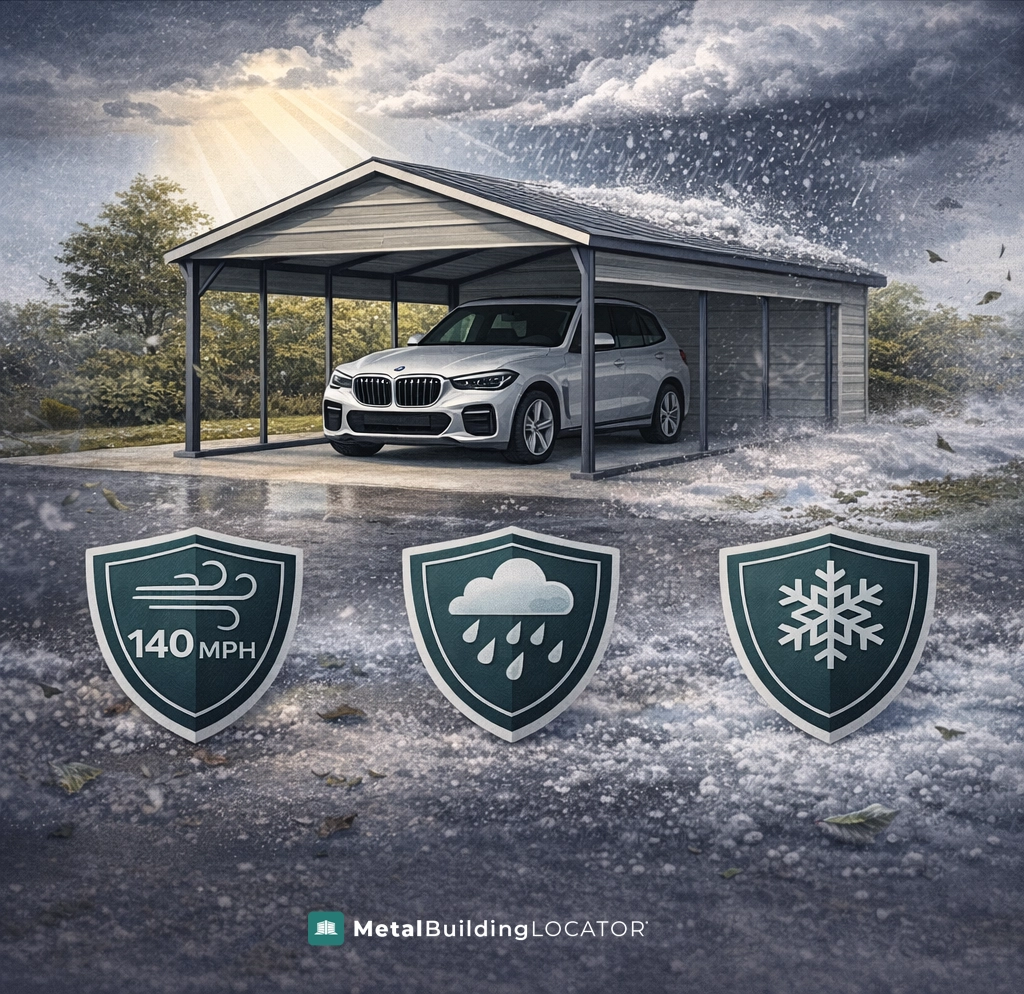
Yes. When properly engineered and anchored, metal carports can withstand high winds, heavy rain, and snow loads. Many metal carports are available with wind ratings up to 140 mph or higher depending on region. Proper anchoring and certified engineering are key to long term durability.
Can a Carport Be Enclosed Later?
Many metal carports are designed to be upgraded over time. Side panels, end walls, and doors can be added later, allowing a carport to transition into a fully enclosed structure if desired.
Is a Carport Right for You?
If you are seeking affordable, reliable vehicle protection without the complexity of full construction, a carport is an excellent option. Understanding what is a carport empowers buyers to make cost effective decisions while protecting valuable assets.
Disclaimer: Images displayed on this website may include digital renderings, simulated environments, or illustrative examples. Actual buildings, materials, colors, dimensions, and features may vary based on design selections, site conditions, engineering requirements, and local building codes. Images are provided for general visualization purposes only and are not intended to represent exact specifications or final construction outcomes.