Share this on:
If you have ever seen a half circle steel building and wondered what it was, you have likely encountered a Quonset hut. These iconic structures have been around for decades and are still used today for storage, workshops, agriculture, aviation, and even homes.
This guide answers one simple but important question: what is a quonset hut and should you consider one for your project?
We will cover how Quonset huts work, where they came from, how much they cost, their advantages and drawbacks, and how they compare to modern metal buildings so you can make an informed decision.
What Is a Quonset Hut?
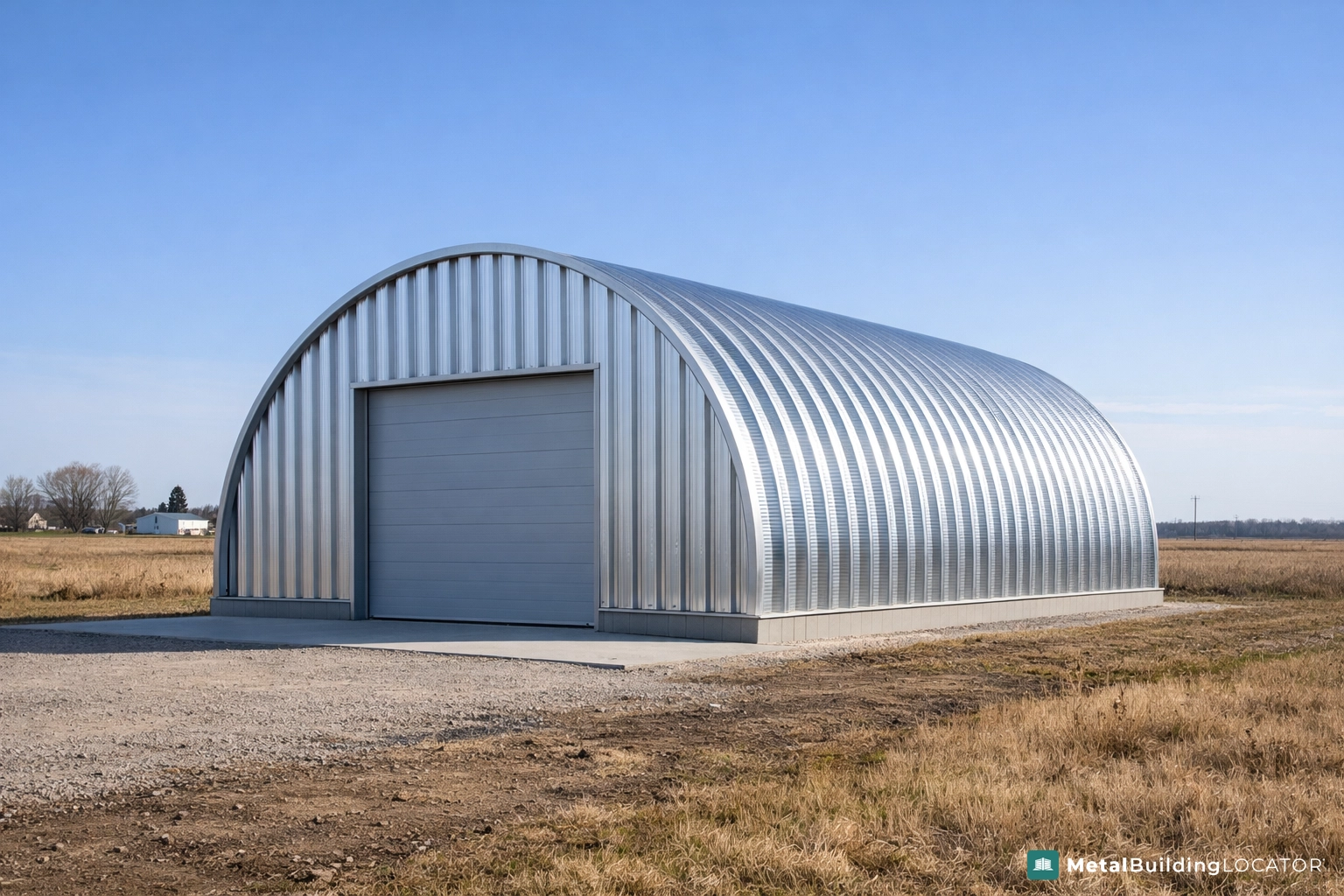
A Quonset hut is a prefabricated steel building with a rounded arch shape made from corrugated galvanized steel panels. The panels are bolted together to form a self supporting structure that does not require interior columns.
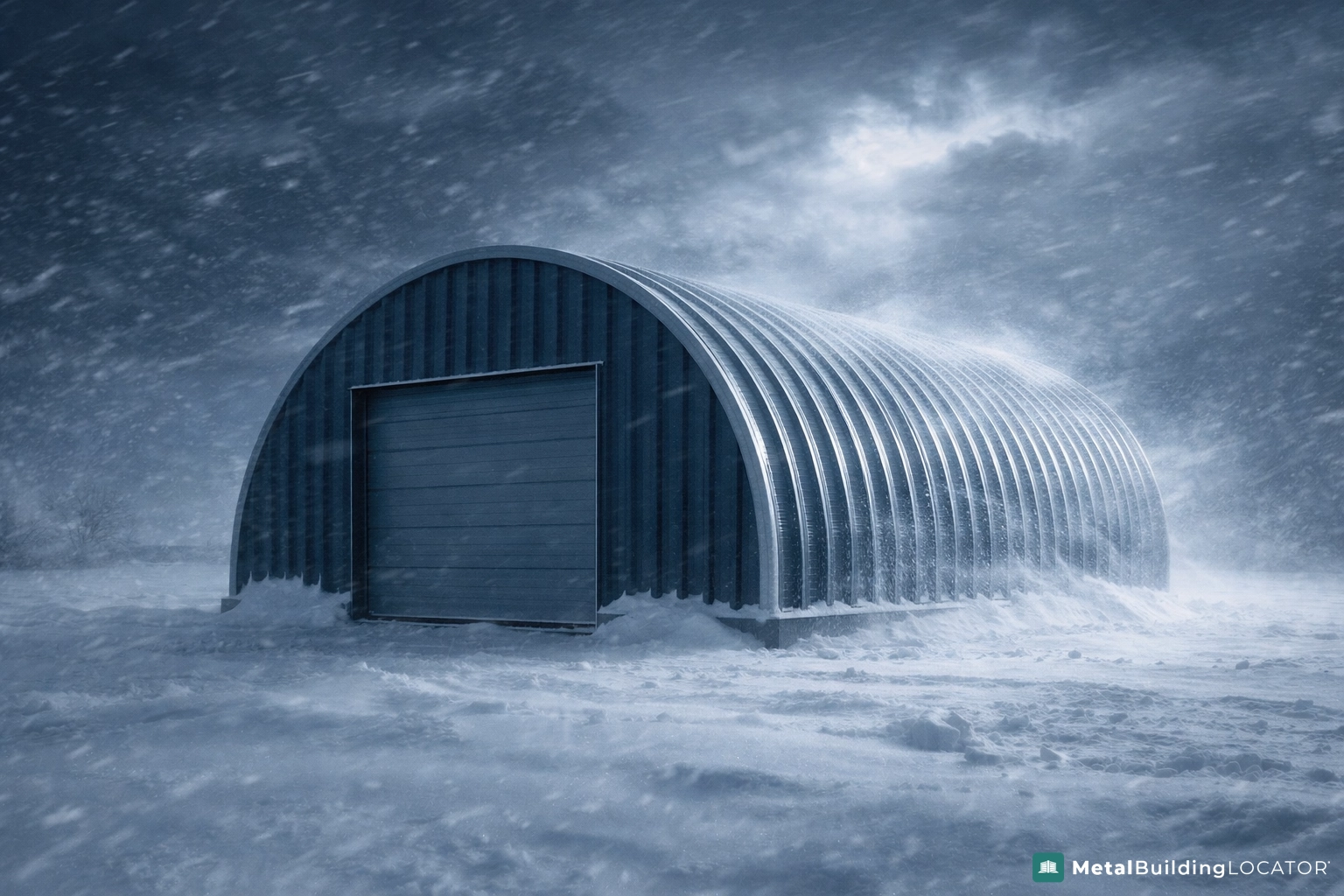
The curved design distributes weight evenly across the structure, allowing it to withstand heavy snow, strong winds, and harsh weather when properly engineered.
Quonset huts are often confused with generic arched steel buildings, but true Quonset huts follow specific design principles that originated with military engineering.
The History of Quonset Huts
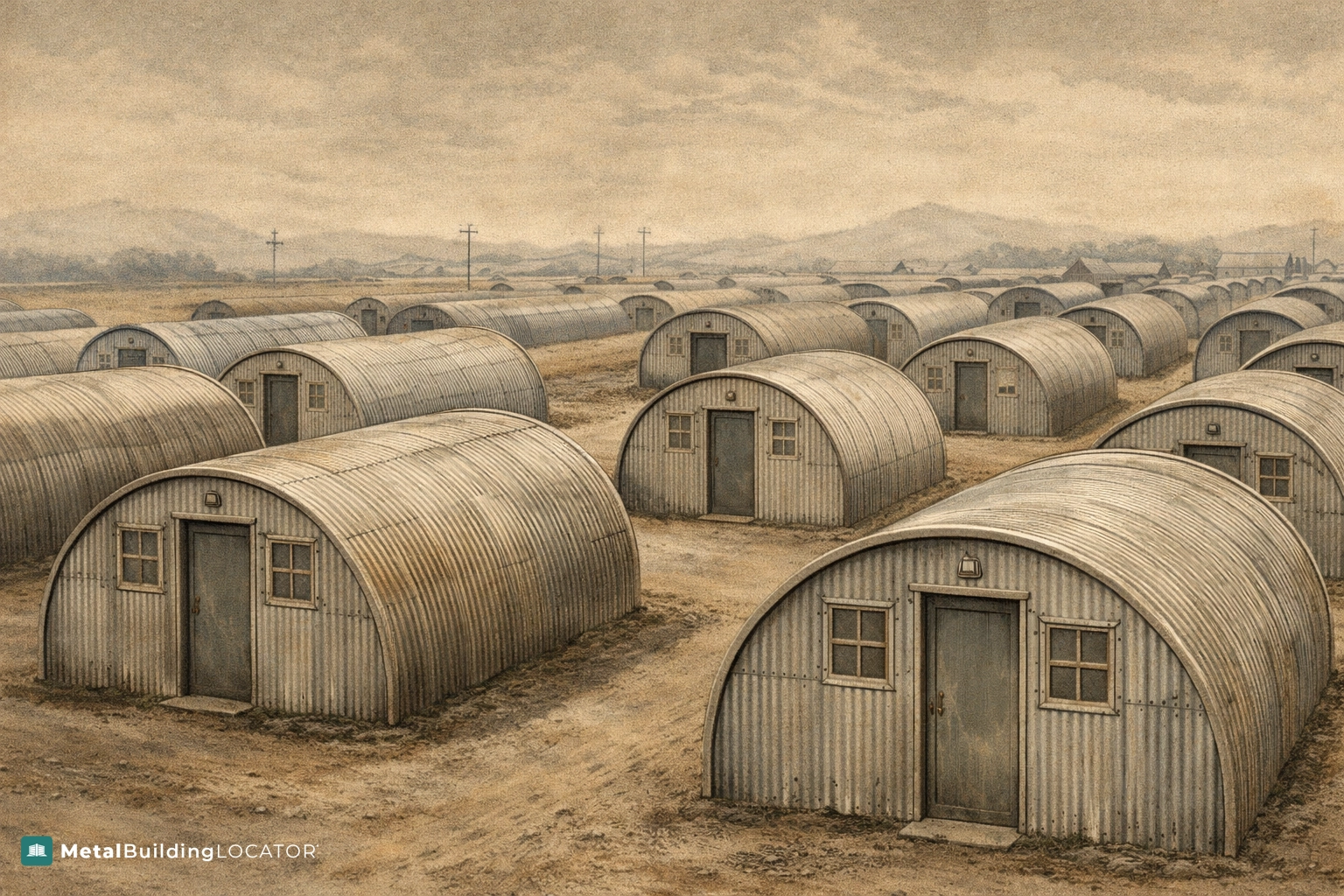
Quonset huts were developed in 1941 by the United States Navy. They were named after Quonset Point in Rhode Island, where the first prototypes were designed.
The goal was simple: create a building that was easy to ship, quick to assemble, durable, and adaptable to many uses. During World War II, more than 150,000 Quonset huts were produced and used as barracks, storage facilities, hospitals, and aircraft hangars across the globe.
After the war, surplus Quonset huts were sold to civilians, where they became popular on farms, industrial sites, and rural properties.
How a Quonset Hut Is Built
Understanding how a Quonset hut is constructed helps explain why it performs so well.
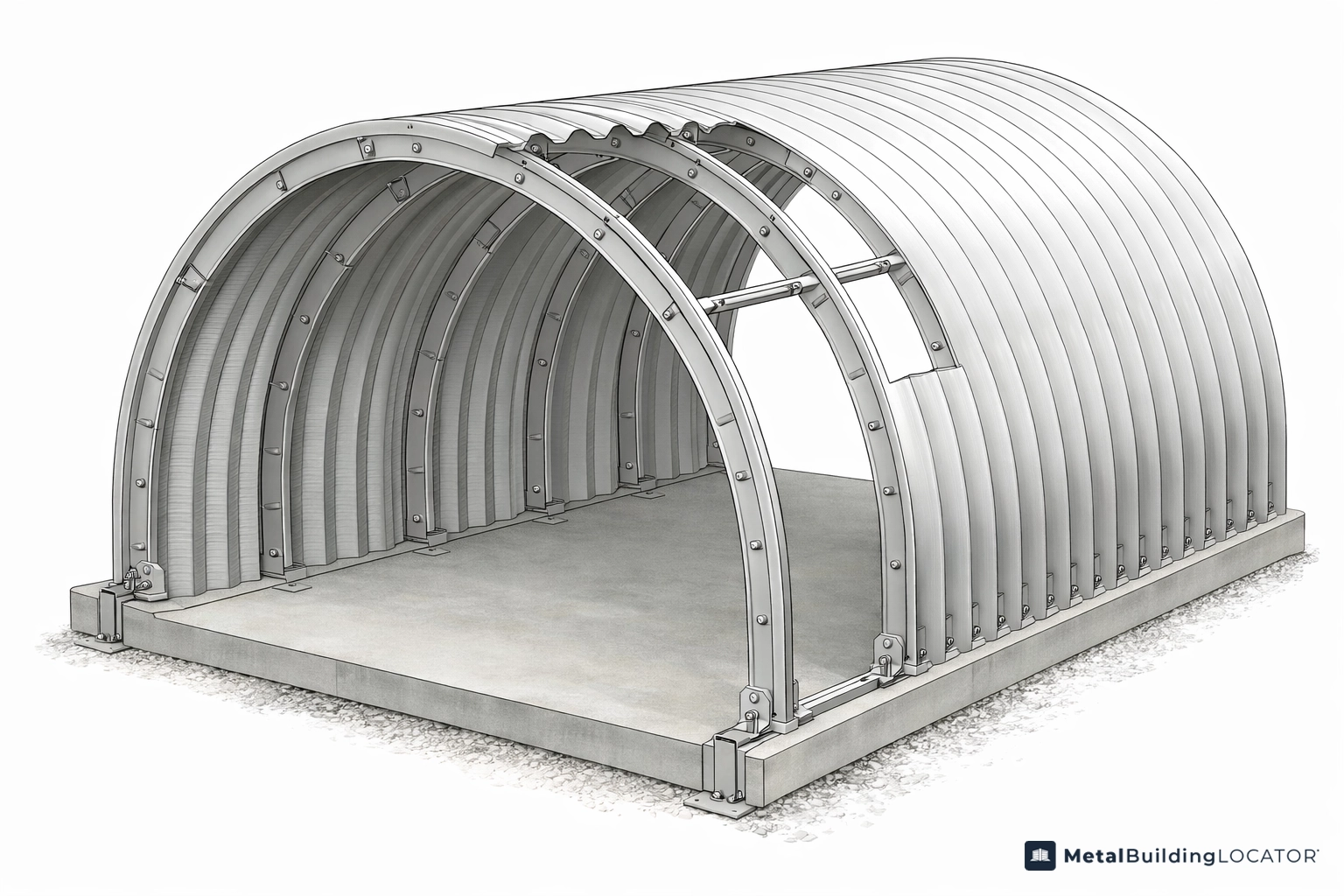
A typical Quonset hut consists of:
The curved steel ribs are bolted together to form the shell. Once assembled, the structure becomes extremely strong due to its arch design.
Unlike many modern metal buildings, most Quonset huts rely on their shape rather than rigid frames for structural integrity.
Common Uses for Quonset Huts Today
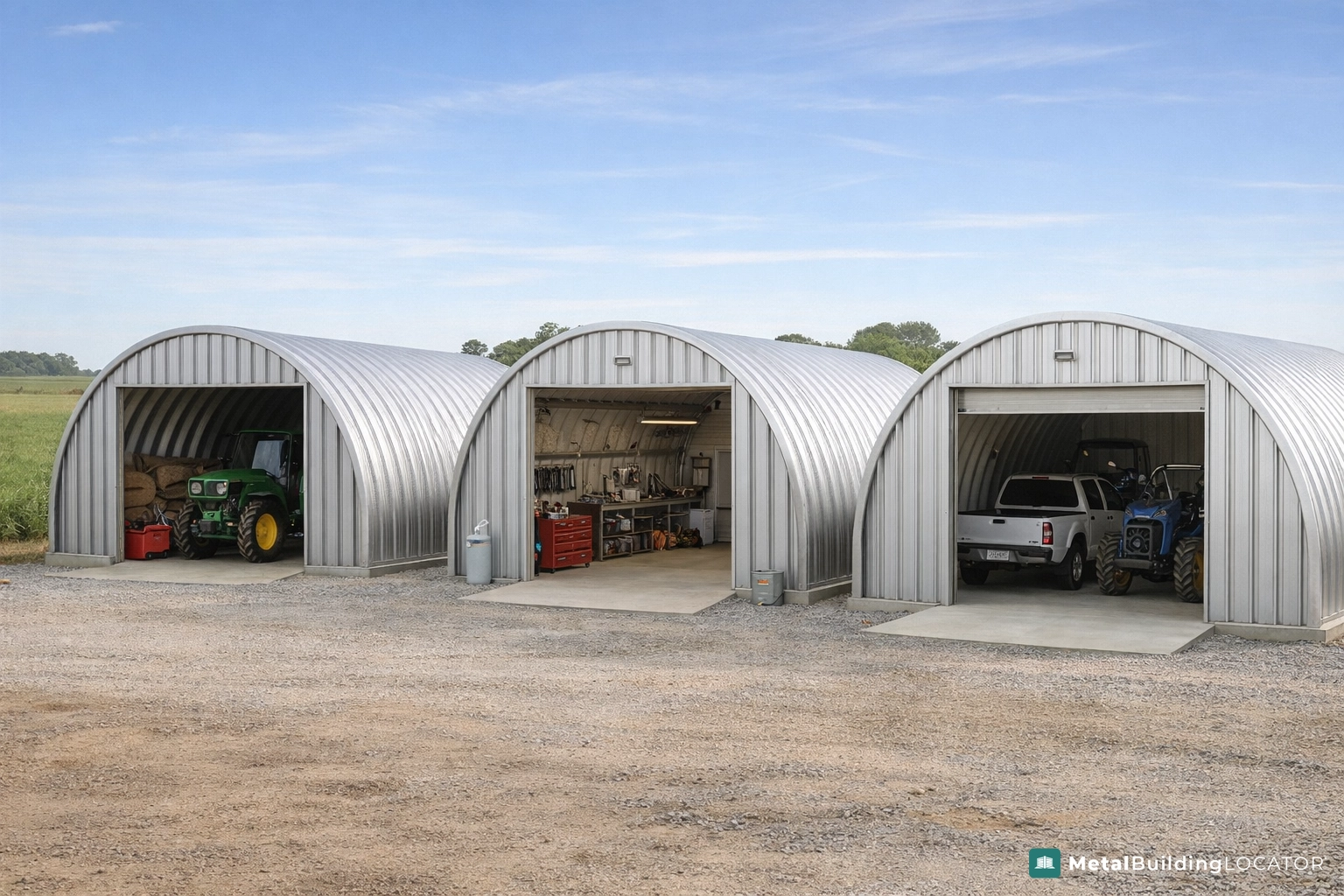
While they started as military buildings, Quonset huts are still widely used today across many industries.
Popular uses include:
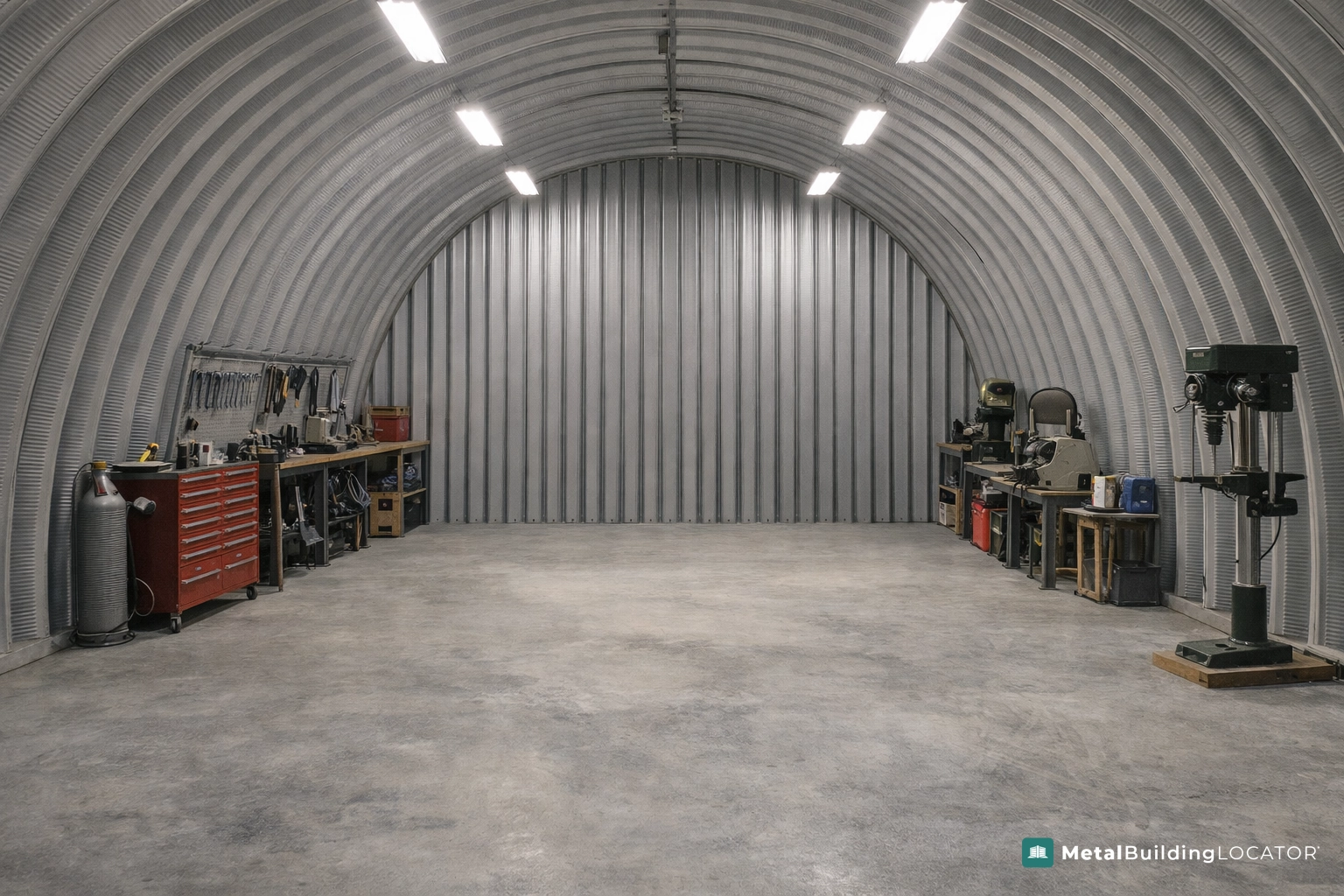
Their open interior makes them flexible, especially for storage or workspaces that do not require finished walls.
Advantages of Quonset Huts
Quonset huts remain popular for good reasons.
Strength and Durability: The arched design naturally distributes loads, making Quonset huts resistant to snow accumulation and wind pressure.
Cost Efficiency: For basic storage or utility buildings, Quonset huts can be more affordable than traditional construction methods.
Fast Installation: Many kits can be assembled quickly with a small crew, especially compared to conventional buildings.
Low Maintenance: Galvanized steel panels resist rust, pests, and rot when properly maintained.
Clear Span Interior: With no interior columns, the entire floor space remains usable.
Disadvantages of Quonset Huts
Despite their strengths, Quonset huts are not ideal for every application.
Limited Design Flexibility: The curved walls make it difficult to install standard doors, windows, shelving, and interior finishes.
Insulation Challenges: Insulating a curved steel surface can be more complex and costly compared to straight wall buildings.
Vertical Wall Limitations: You lose usable wall height near the sides, which can limit layout options.
Resale and Zoning Concerns: Some municipalities restrict Quonset huts for residential or commercial use due to aesthetics or zoning codes.
Quonset Hut vs Modern Metal Buildings
Many buyers ask whether a Quonset hut or a modern steel building is the better choice.
Here is a simple comparison:
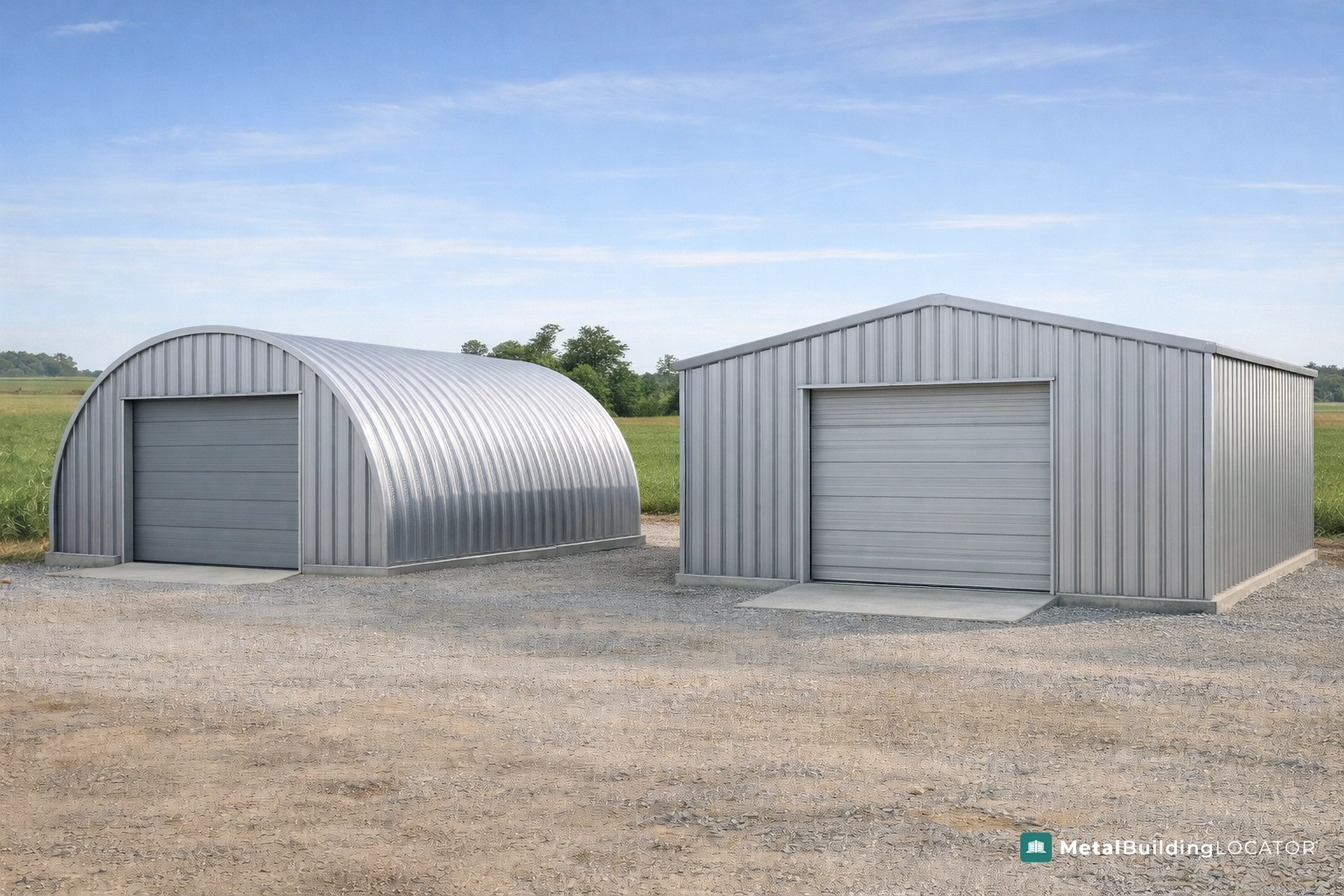
Quonset huts use curved panels and rely on shape for strength
Modern metal buildings use rigid steel frames with straight walls
Quonset huts are ideal for storage and utility uses
Modern buildings offer more flexibility for commercial and residential designs
Quonset huts are typically simpler structures
Modern buildings support insulation systems, interior framing, and expansions more easily
For workshops, garages, businesses, or barndominiums, modern metal buildings are often more practical.
How Much Does a Quonset Hut Cost?
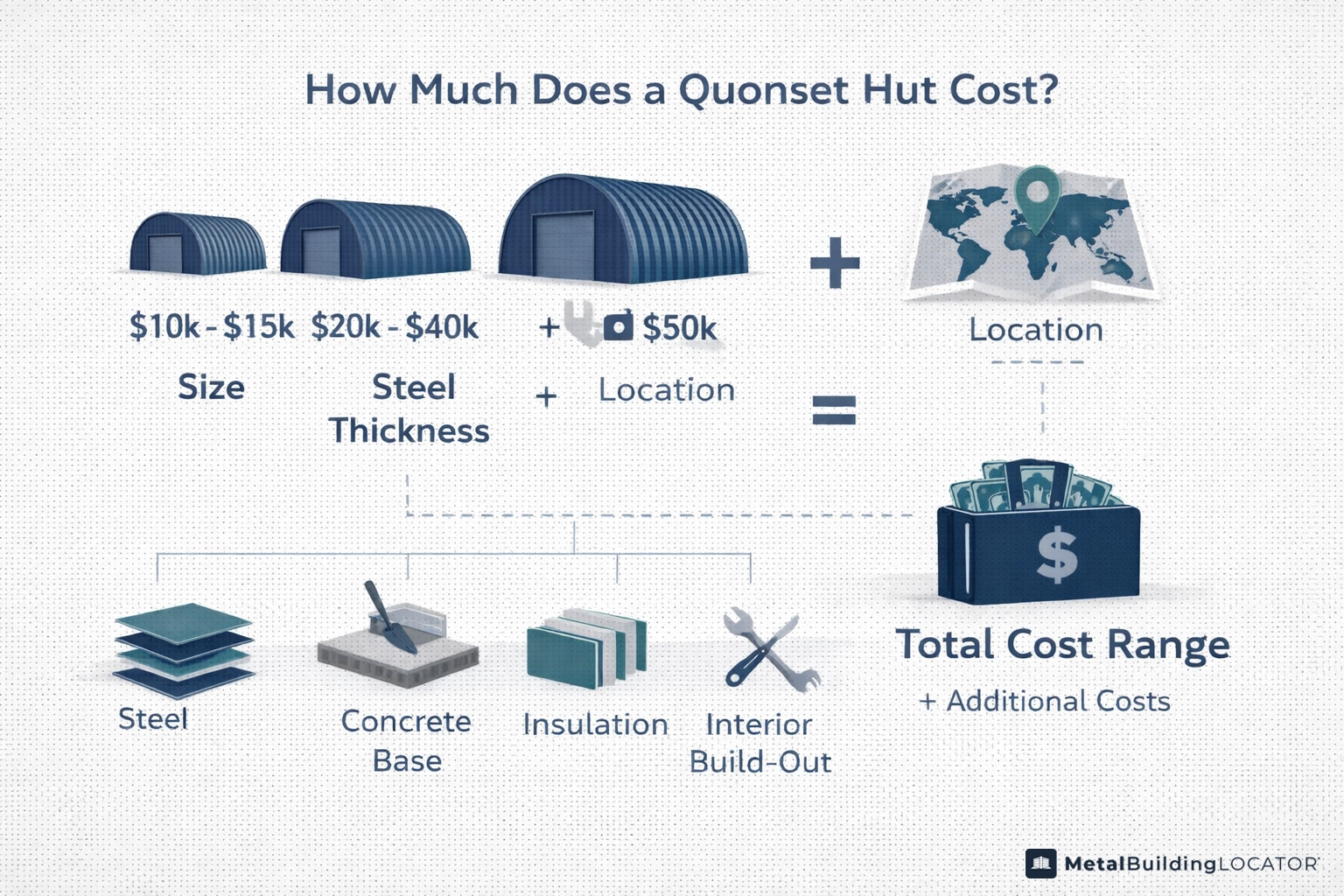
Pricing varies depending on size, steel thickness, and location.
General cost ranges:
These prices usually do not include:
Always factor total project costs, not just the kit price.
Are Quonset Huts Still a Good Investment?
Quonset huts remain a solid option for specific needs, especially when durability and simplicity matter more than aesthetics.
They are best suited for:
If you want a building that looks more traditional, supports finished interiors, or meets strict zoning rules, a modern metal building may be a better long term investment.
Permits and Engineering Considerations
Most areas require permits for Quonset huts just like any other structure.
You may need:
Always check local building codes before purchasing a kit to avoid costly delays.
Is a Quonset Hut Right for You?
If your primary goal is durable covered space at a reasonable cost, a Quonset hut can be an excellent solution.
However, if you plan to finish the interior, add standard windows and doors, or create a living space, a straight wall metal building is usually easier and more flexible.
Understanding what a quonset hut is helps ensure you choose the right structure for your needs, budget, and long term plans.
Disclaimer: Images displayed on this website may include digital renderings, simulated environments, or illustrative examples. Actual buildings, materials, colors, dimensions, and features may vary based on design selections, site conditions, engineering requirements, and local building codes. Images are provided for general visualization purposes only and are not intended to represent exact specifications or final construction outcomes.